
Blog
// Lekker's Blog
How to Qualify Asia Suppliers
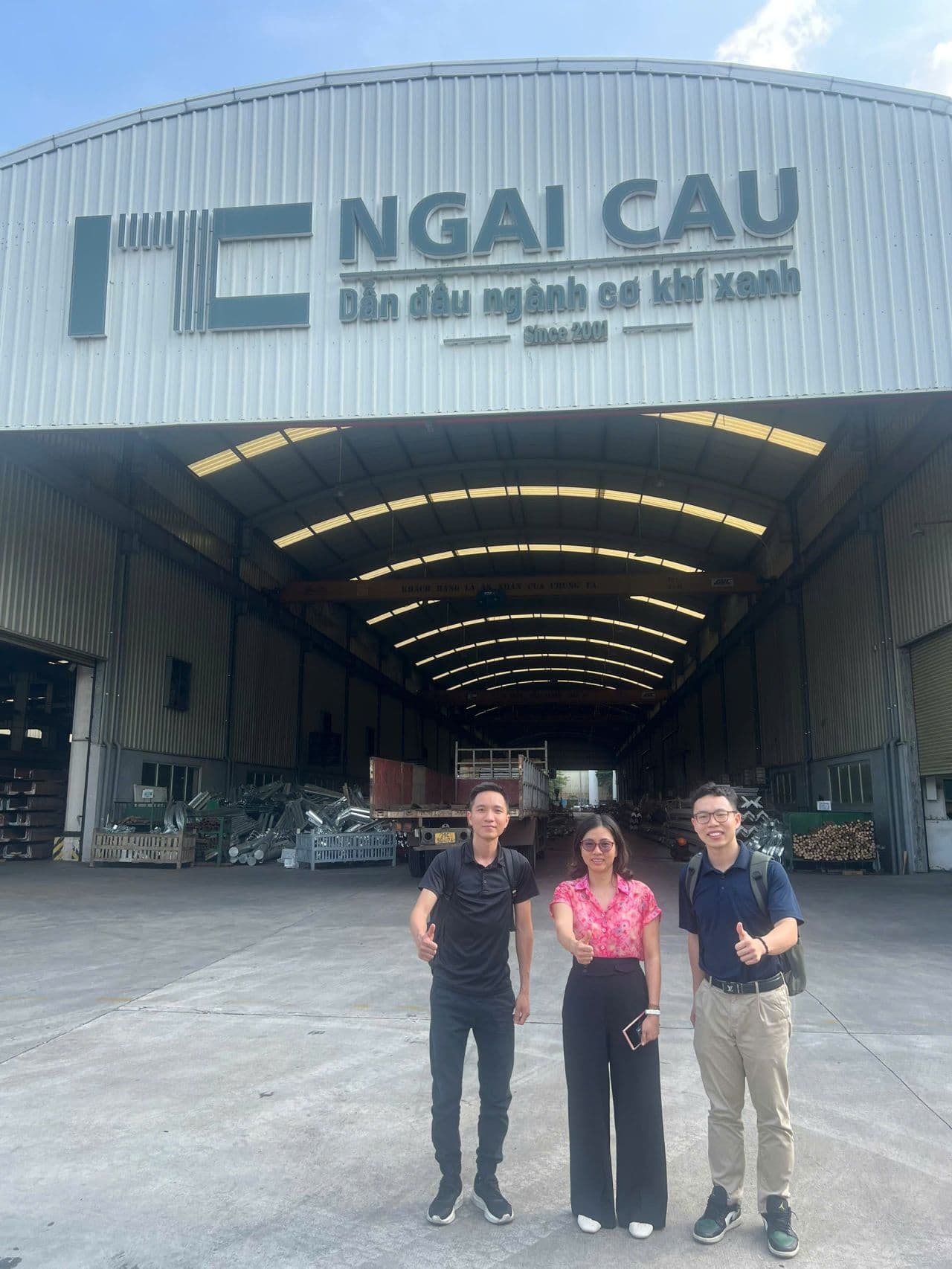
How to qualify Asia suppliers is a different job from collecting catalogues. Qualification is the sequence that takes a long list to a plant you would actually tool — commercially, technically, and on quality systems — before volume money is committed.
This is for buyers sourcing components, assemblies, or materials across Asia (China, Vietnam, Thailand, Malaysia, and neighbours), not a single-country CNC RFQ. For machine-shop specifics in Vietnam, use the narrower CNC vendor checklist.
Use GATE — four steps, in order:
G — Grade: Interesting vs awardable (commercial / technical / system)
A — Assess: Desktop filters before you spend on samples
T — Test: Sample from the production cell, not a prototype shop
E — Enter: On-site only when the risk table says so
Then run the sequence to a pilot lot — or stop.
1. G — Grade: interesting vs awardable
A useful gate has three layers. Mix them and you will either over-visit or under-check.
Commercial — Can they export your Incoterms, MOQ, and payment terms without improvising? (Export history, packing spec, English contracts)
Technical — Have they run this process at similar volume and material? (Process list, similar parts (not a recycled portal photo))
System — Will quality hold when the owner is not in the room? (Inspection plan, calibration, nonconformance handling)
If any layer is “we can try,” that is a development project, not a qualified source. Development can be the right call — name it, with extra time and SQE budget.
2. A — Assess: desktop before samples
Legal and export entity. Is the company on the quotation the manufacturer, a trader with named factories, or a mix? Traders are not automatically disqualified; undisclosed traders are.
Process match. The line that would run your drawing. A strong stamper is not qualified for your CNC housing because they “also have two mills.”
Customer and industry fit. Automotive, medical, and industrial export have different document habits. A plant that only serves local construction will struggle with your PPAP-style pack even if the parts look fine.
Capacity honesty. Quoted capacity vs shifts, and what share of the shop your job would consume. A plant at 95% load will miss you first when a bigger local customer moves.
Kill options that fail entity, process match, or capacity. Do not spend sample budget to be polite.
3. T — Test: samples are not production
Asia suppliers are used to making beautiful samples. Qualification fails when the sample cell is not the production cell.
Ask, in writing:
Same machines, tools, and operators as volume — or a prototype shop?
Incoming material heat/lot for the sample, and whether volume will use the same mill or compound.
Inspection method on the sample vs the production control plan.
If they cannot answer, the sample is a sales object. Treat it as a capability hint, not a process capability study. For dimensional work, a first-article pack with a ballooned drawing beats a glossy photo.
4. E — Enter: when you must go on-site
Remote qualification is enough for low-risk, catalogue-like items with a second source. It is not enough when:
Tooling or moulds are expensive and stay at the plant
Safety, regulatory, or tight-tolerance features are on the drawing
You have no second source in the region yet
The plant outsources a critical step you have not seen
That visit is a factory audit in Asia, not a relationship dinner. Qualification includes deciding whether the audit is mandatory for this SKU.
Sequence after GATE
Long list (how to find suppliers in Asia).
Desktop scorecard (G + A).
Sample or process capability on the real line (T).
Audit if the risk table says so (E).
Pilot lot with written exit criteria (PPM, OTD, claim response time).
Only then: volume PO and tooling payment schedule.
Skipping to volume because the sample was cheap is the failure mode we still see. The plant is not always dishonest; the process was never qualified.
If your team can run GATE, keep it in-house and use a local SQE for audit days. If you cannot staff desktop plus visits across more than one country, Market Research & Supplier Discovery builds and filters the list; on-site verification sits with OEM & Component Sourcing.