
Blog
// Lekker's Blog
OEM Brackets Sourcing Asia: Drawing to Sample
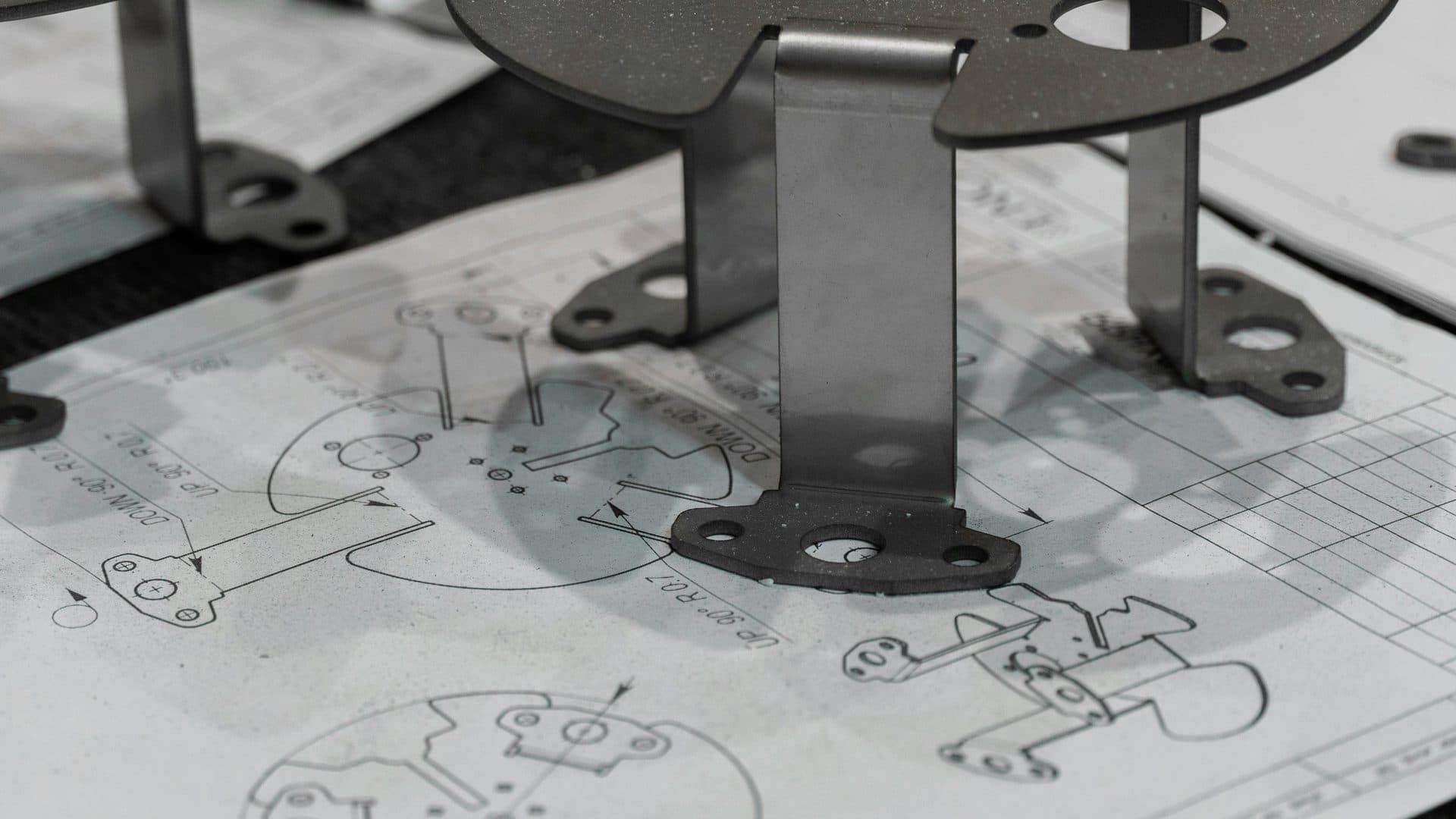
OEM brackets sourcing Asia fails when the buyer treats a bent sample as a production award. Brackets and mounts look simple — flat pattern, a few bends, holes, maybe weld nuts — but they sit on critical datums for machines, vehicles, enclosures, and frames. A wrong bend sequence, soft material swap, or loose hole pattern shows up as assembly scrap, not a cosmetic complaint.
This guide is for procurement and engineering teams moving metal brackets, mounts, and small supports from drawing to a credible Asia sample. Vietnam capacity notes on OEM brackets & mounts are proof that the process exists on the ground; they are not a vendor shortlist. For RFQ packaging across sheet metal families, use sheet metal RFQ Asia. General shortlist and visit habits stay in find, qualify, and factory audit.
1. Lock the drawing package before you shop
Send a production-intent pack, not a screenshot:
Current revision (PDF + STEP/IGES). State which wins if they conflict.
Material grade, thickness, and finish per part — not “steel, paint.”
Bend notes: inside radii, critical flatness, grain if cosmetics or strength matter.
Hardware: weld nuts, clinch / PEM part numbers, install before or after finish.
CTQs: hole positions relative to datum, slot sizes, mating faces.
If the bracket welds to a tube or plate, include the weld map. “Weld as needed” is how you buy rework. Write substitution rules for mill equivalents early — many Asia fabs will propose local coil; decide who approves.
2. Match process to the part, not the brochure
Brackets are not one process:
Flat + bends, low volume — Likely primary: Laser + brake · Watch for: Bend sequence, springback
High repeat, tight nest — Likely primary: Punch / stamp + form · Watch for: Die ownership, revision cost
Thick / structural — Likely primary: Welded mount or CNC feature · Watch for: Fixture ownership, weld access
Precision hole pattern — Likely primary: Laser/punch + secondary machine · Watch for: Datum scheme on FAI
Ask the plant to name the route for your revision: blank → form → hardware → finish → pack. A sample made on a prototype brake with hand-drilled holes is not the route you will get at volume. Prefer plants that show equipment for your thickness and bend count — not a general “sheet metal capable” claim.
3. Sample for production intent, not the showroom tray
Define what “sample pass” means before the blank is cut:
Same material grade and thickness as production (or documented temporary exception).
Same finish callout — or a clear “sample unfinished / finish TBD” label so you do not approve cosmetics that volume cannot hold.
Same hardware install sequence relative to plating or powder.
Measurement plan tied to CTQs (CMM, height gauge, or templates you own).
Compare the Asia sample to a known-good part from your primary plant when you have one. Cost-only samples that skip weld nuts or powder teach you almost nothing. If finish is outsourced, name the finisher on the sample route — silent “we powder somewhere” is incomplete.
4. FAI and packing before volume
First article is the real gate:
Dimensional report against your CTQs and title-block tolerances.
Hardware pull / install verification where the print requires it.
Cosmetic zones called out (visible face vs hidden).
Export packing: edge protection, rust prevention, bag vs carton — brackets ship sharp and nest badly when packing is vague.
Keep soft tools and dedicated gauges ownership in writing. If the plant “owns” the form tool and will not transfer, you do not have a dual-source path — you have a single fab with a nice sample. For tooling language across Asia OEM metal, see the tooling ownership draft when you dual-source later.
5. Commercial and quality questions that belong with the sample PO
Ask before award:
Lead time from approved FAI vs from blank PO
MOQ and nesting assumptions for your blank size
Metal price adjustment rules and quote validity
Who pays for revision changes after soft tools are cut
Independent QC vs production self-check
Treat a 24-hour quote with no questions as a ballpark, not a partner. Strong fabs ask about revision, weld access, finish-after-hardware, and cosmetic faces. After shortlist, walk the brake and hardware stations — not only the laser cell.
When you need drawing-to-plant verification across Asia (with Vietnam as on-the-ground proof), OEM & Component Sourcing is the Lekker path that keeps OEM brackets sourcing tied to process fit and sample honesty — not only a cheaper line on a spreadsheet.
OEM brackets sourcing Asia is a short program: complete drawing, honest process route, production-intent sample, FAI and packing, then volume. Skip the sample discipline and you have approved a photo, not a mount that fits.