
Blog
// Lekker's Blog
What an SQE Does for Metal Sourcing in Asia
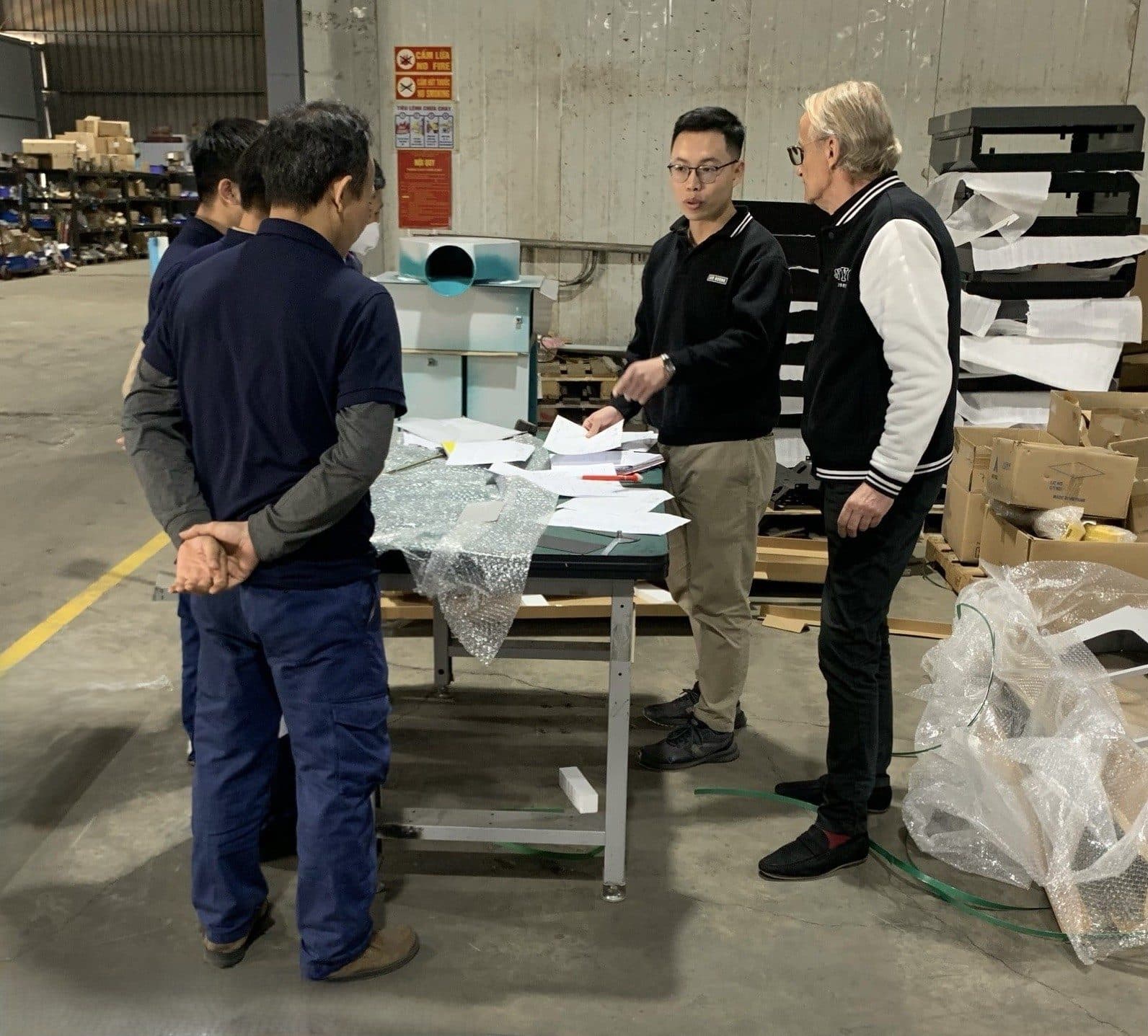
An SQE Asia role is not a translator with a checklist. For buyers of sheet metal, CNC parts, castings, and welded assemblies, the supplier quality engineer is the person who turns a drawing into a plant that can hold it — before volume, during pilot, and when the first claim arrives.
This guide is for procurement and engineering teams who already shortlist Asia plants and need clarity on what SQE work actually covers. Finding names is a separate job (how to find suppliers in Asia); qualifying and auditing are related. Here the focus is the ongoing quality bridge between your print and the shop floor.
Use TRACE — five jobs an SQE owns on a metal program:
T — Tighten: Drawing, rev, CTQs before RFQ
R — Route: Process capability vs brochure
A — Assay: Samples, FAI, gauges that match
C — Control: Lot release and change discipline
E — Enforce: Claim loop and continuous scorecard
1. T — Tighten: make the print purchasable
Metal RFQs fail when SQE work starts after the PO. Before quotes:
Lock revision, material callouts, finish specs, and critical-to-quality dimensions.
Separate “must hold” from “nice on the print” so the plant does not quote hero tolerances on every feature.
Name outsourced steps you will allow (plate, heat treat, paint) so the quote route matches reality.
Send a single package: PDF + native CAD if needed, ballooned drawing, and a short CTQ list in English the plant can run without guessing.
An SQE who only joins at FAI is cleaning up ambiguity the RFQ should have killed. The same discipline applies whether the part is a bracket, an enclosure, a CNC housing, or a cast blank that still needs machining.
2. R — Route: process fit, not certificate fit
Asia plants often pass paper filters and fail the process that makes your part.
Match equipment to the route: laser + brake + weld is not the same plant as a 5-axis cell or a die-cast + machine shop.
Ask for a route sheet for your revision: which stations, which gauges, who signs first-article.
Treat ISO or IATF as claims until scope and surveillance dates are checked on site.
Flag traders early; an SQE cannot hold a process that lives three parks away with no named partner.
SQE Asia work is skeptical of showroom samples. The question is whether the production cell can hold the same points under volume pressure — and whether QC can stop the line without waiting for the owner’s phone.
3. A — Assay: samples and FAI that mean something
Demand production-intent evidence:
Same material lot logic, same fixtures or documented temporary tooling, same inspection points as the drawing.
CMM or layout reports tied to your CTQs — not a generic capability brochure.
Finish and packing checked as part of the sample, not “we will set packing later.”
Record which gauges the plant will use in volume; sample-room tools that never appear on the floor are a red flag.
Compare the Asia sample to a known-good part from your primary plant when you have one. Cost alone is a weak pass criterion if metrology and finish diverge. For CNC families, Vietnam vs China cost notes on the site are useful as a checklist — not as a blanket “Asia is cheaper” claim.
4. C — Control: release rules and change control
Once the plant is live, SQE owns the boring controls that prevent silent drift:
Written lot-release criteria (what fails, who stops the line).
Engineering change process: who approves a fixture tweak, a substitute alloy, or a finish vendor swap.
Visibility into outsourced partners — plating and paint shops are part of the control plan even if they are off site.
Retention of first-article and capability data so the next revision does not restart from zero.
Without this, you have a vendor who “usually ships OK” until a peak season or a new operator.
5. E — Enforce: claims and the scorecard
SQE Asia is also the claim path: quarantine, structured containment, root cause tied to process not personality. Keep one scorecard across plants — process fit, QC independence, delivery, communication — so dual-source and China+1 decisions use the same language as the diversify playbook.
If your bench cannot staff tightening through claim loops across countries, OEM & Component Sourcing is the Lekker path that keeps SQE-style verification on the shop floor — not only a shared-drive report after the tool is paid.
An SQE in Asia for metal programs tightens the print, routes for process fit, assays real FAI evidence, controls release and change, and enforces the claim loop. Skip any letter and quality becomes a hope attached to a purchase order.