
Blog
// Lekker's Blog
When Not to Source Metal in Vietnam
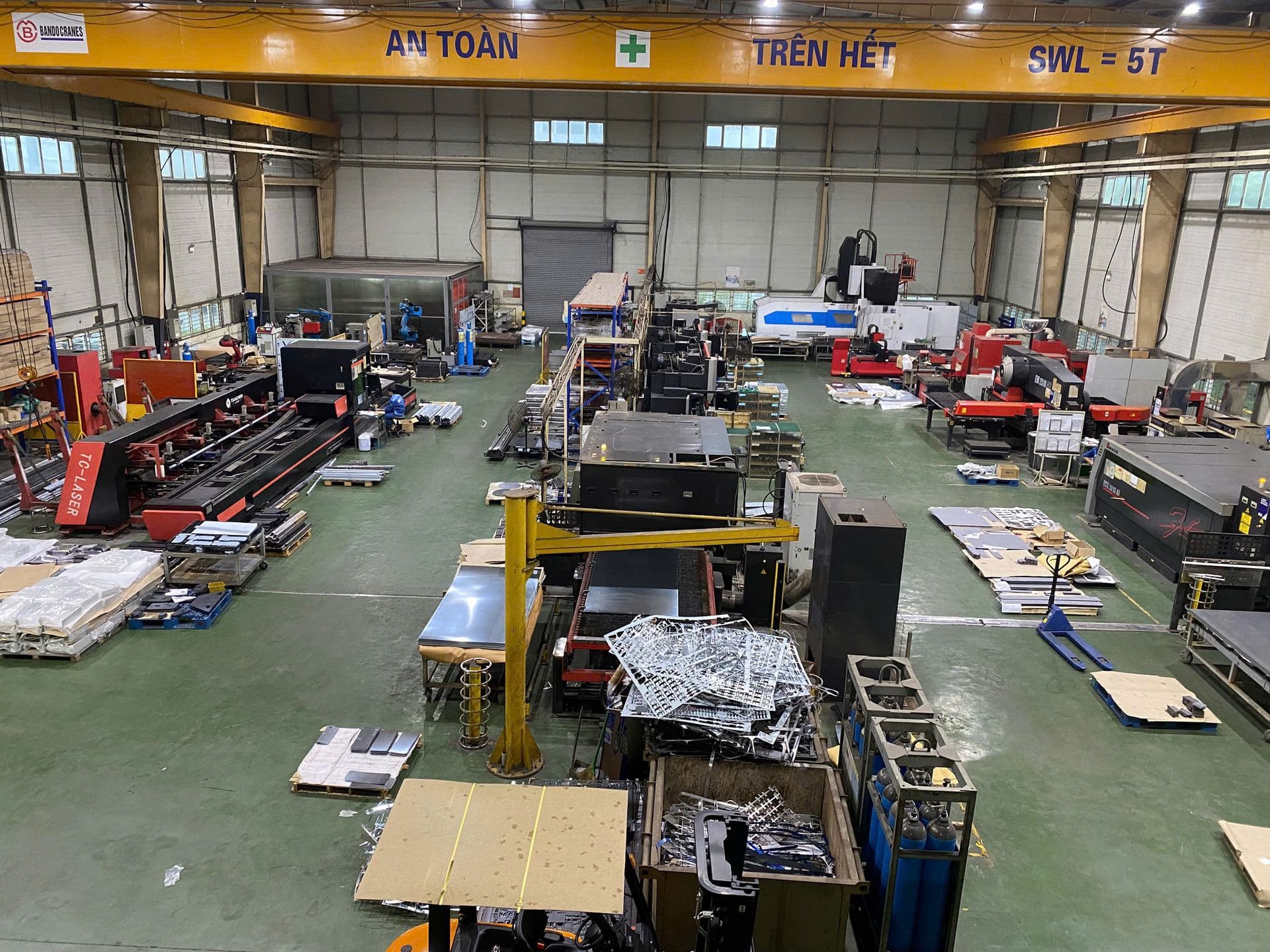
When not to source metal in Vietnam is as useful a buyer question as when to try. Vietnam is real metal capacity — CNC, sheet metal, enclosures, and related fab show up as proof on this site — but it is not a universal substitute for China depth. An honest filter protects both the PO and the country: force-fit programs create late launches and unfair “Vietnam failed” stories.
This guide is for procurement teams considering Vietnam as China+1 or as a first Asia metal path. It is not anti-Vietnam marketing. Many programs should land here when process, tooling, and schedule clear the gates. Use the filters early so the right SKUs move and the wrong ones stay on China (or another country) without drama. Pair with how to find suppliers in Asia and how to qualify Asia suppliers. When Vietnam does fit a family, prove it on the floor with a factory audit in Asia.
Five filters — walk away (or pause) when any one is red:
1. Process depth does not match the BOM
Pause Vietnam when your constraint process is thin or missing in-country for your envelope:
Special alloys or cast routes you cannot verify beyond brochure language
Tight multi-op CNC with finishes and heat treat that require a long anonymous subcontract chain
Processes where every credible plant you can visit still sits outside Vietnam
Equipment lists that look right on paper but cannot run your size, thickness, or tonnage on the floor
Vietnam CNC and enclosure proof posts are useful when machining or sheet metal is the job — see Vietnam CNC vs China and the enclosure hub. They are not a license to move every metal SKU because the flag is popular. Process mismatch is not a quality failure later; it is a sourcing error now.
2. Tooling and fixtures cannot transfer cleanly
Do not award Vietnam as +1 when:
The China (or other) primary owns dies/fixtures with no transfer clause and you refuse to fund a second set
Critical jigs are undocumented “shop knowledge”
You need hard dual-source interchangeability but will only pay for one country’s tools
Nest programs, weld fixtures, or CMM routines stay plant-secret with no buyer copy
Soft dual inside one group can still work for capacity. Geopolitical dual-source without buyer-owned (or transferable) tooling is hope, not a second source — in Vietnam or anywhere. Write ownership before the first pilot PO, not after the first ECN fight.
3. Finish and heat-treat routes are opaque
Walk away when plating, powder, anodize, or heat treat sit on CTQs and:
The fab cannot name the finish partner or allow a visit/audit
Lot traceability between fab and finish is improvised
Your claim window depends on finish integrity you cannot inspect upstream
Cosmetic or corrosion class is “we will try” instead of a written standard
A strong weld cell with anonymous plating is an incomplete Vietnam source — same rule as elsewhere in Asia. Fix the finish map first, or keep the SKU on the primary plant until you can. Vietnam does not uniquely fail here; buyers uniquely ignore the map when they are eager to show a China+1 slide.
4. Volume, MOQ, and schedule reality conflict
Vietnam is the wrong fit for this SKU when:
You need China-like depth overnight for a huge, unstable ECN book with no pilot plan
MOQ and lead time for your process/finish miss the program calendar after honest quotes
Your team cannot staff SQE or visits for the first lots
Buffer inventory and expedite risk erase any unit-price story before volume is stable
Cost alone is a weak reason to force the move. A plant that looks cheaper on unit price and cannot pack for export or hold CTQs will erase the gap in claims and expedites. Do not invent average savings; compare quotes and route sheets for the actual drawing. If the calendar needs China depth this quarter, say so — and park Vietnam for the next family that has time to prove.
5. The buyer need is “any Asia flag,” not metal fit
Skip Vietnam when the internal brief is political optics only:
No scoped part family, no exit criteria, no audit plan
Shortlist built from traders who will not open the real fab
Expectation that one visit replaces FAI and pilot lots
Success measured as “we have a Vietnam supplier” rather than interchangeable lots on the dock
Build a real shortlist with Market Research & Supplier Discovery when you still need names. Award Vietnam when process, tooling, finishes, and schedule clear the filters — and keep China (or another country) for the families that do not. That is fair to Vietnamese plants and fair to your customers.
Vietnam metal sourcing fails buyers when they ignore process depth, tooling transfer, finish opacity, volume reality, or empty “pick a flag” briefs. Use the filter early; the country earns better outcomes when the wrong SKUs stay elsewhere.