
Blog
// Lekker's Blog
Sample to Production for Casting in Asia
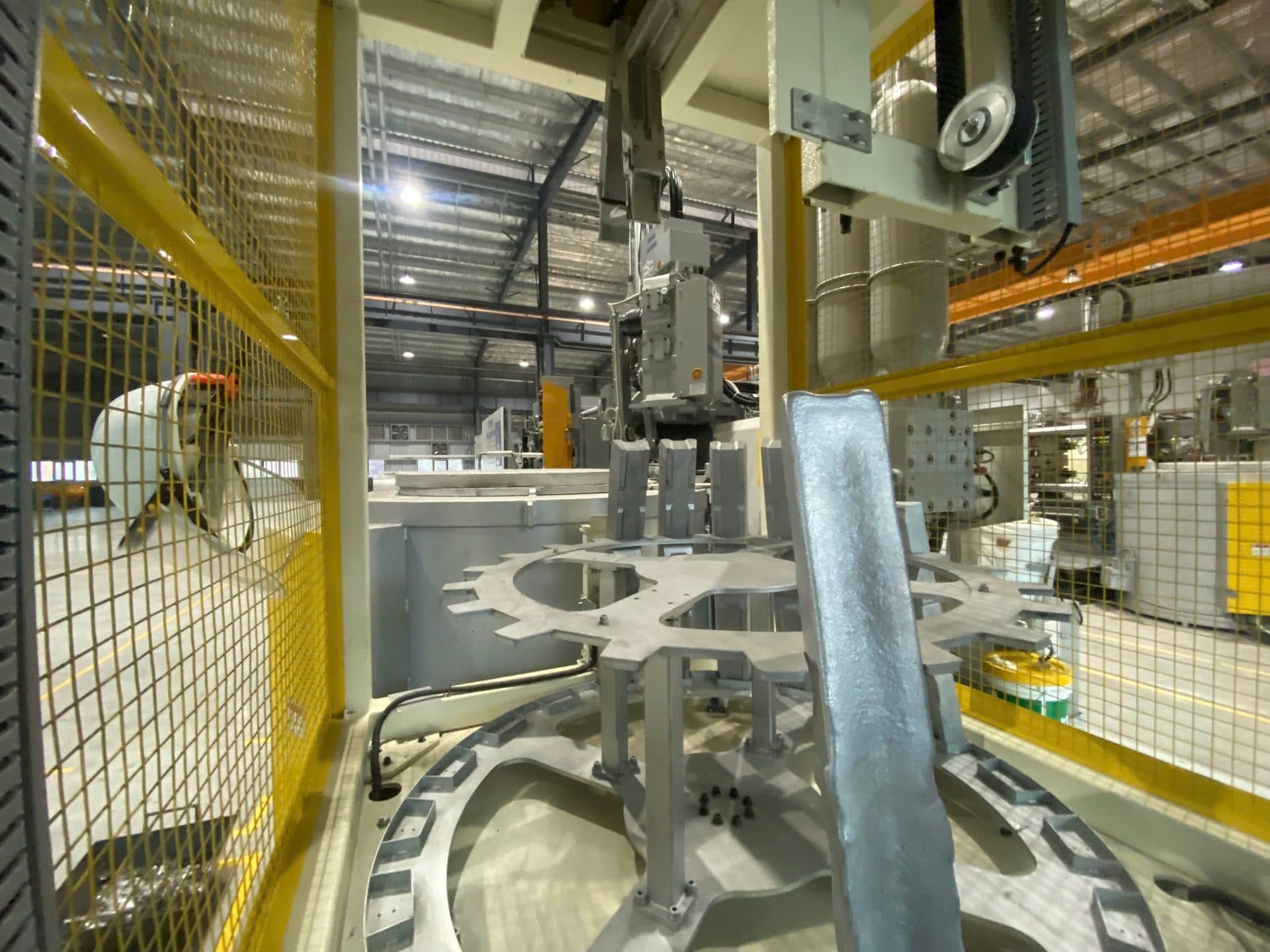
Taking a casting from sample to production in Asia is a gated path: first piece on the real tool, first-article inspection, a pilot pour, then volume. For industrial buyers of die-cast, investment-cast, or sand-cast parts, the usual failure is a polished sample that never ran on the production die, melt, or finish route — then the PO launches and porosity, flash, or machining stock change.
This guide is for SQE and procurement teams who already chose casting as the primary process and have a qualified foundry. If you still need to pick casting versus fab or CNC, use casting vs fabrication vs CNC sourcing. Finding and qualifying stay in how to find suppliers in Asia and how to qualify Asia suppliers. Plant walks belong in how to conduct a factory audit in Asia. Vietnam landscape notes (die casting, investment casting) are capability context, not a volume gate.
Here the job is casting gates only: sample → FAI → pilot pour → volume.
1. Define what “sample” means on a casting program
Write it on the sample request or PO:
Same die or mold you will use for volume (or label the piece temporary tooling)
Same alloy family and melt practice you will require later
Same trim / gate / finish route — not a hand-finished showroom coat
Whether secondary machine stock on the sample matches the production print
Quantity, and whether wax, pattern, or die tweaks are still open
A casting filed to print on the bench is marketing. A production-intent sample is evidence: shot or pour on the production tool, same insert condition, same heat practice. If the foundry must use a soft tool or a cousin die to hit a date, label it temporary and schedule a second sample on the production tool — do not treat the temporary piece as a volume gate.
2. Run FAI on as-cast and after-machine points that protect the assembly
First-article inspection for castings should:
Use the datum scheme on the controlled drawing
Separate as-cast balloons from after-machine balloons (do not mix them in one argument)
Cover porosity / leak / visual class if the print or spec calls them out
Record actuals against revision, with photos of the cavity, shot number, or heat ID if the process is sensitive
Freeze the approved revision and tooling state before any volume cut
If FAI passes on a soft revision while engineering still edits machining stock or draft, you have not gated anything. Lock effectivity: volume may start only on rev X after signed FAI on this die / mold. Keep the signed FAI with the route sheet (pour → trim → heat treat if any → machine → plate or powder) so planners cannot open a volume PO against an older PDF.
3. Pilot pour: stress the foundry constraint, not the easy op
Pilot size should exercise the hard casting step — not a single pretty cavity on a quiet shift.
Die casting — Production die, production shot parameters, trim, and any named porosity method
Investment — Production shell / pour practice, not a one-off wax hero
Sand — Production pattern and core practice at the quoted rate
If the print requires machine after cast, the pilot must include that machine loop on production-intent stock — not a fully CNC’d fake “casting.” If finish (plate, powder, shot blast) is on the critical path, run at least one full finish cycle; skipping it “to save time” only moves the defect to the first customer shipment.
Compare pilot parts to FAI with the same CMM points and the same as-cast vs after-machine split. Pack the pilot like export volume. Keep a written hold: no open volume PO until the pilot clears dock criteria (dimensional, visual/porosity class, packing).
4. Volume gate: melt and die capacity, route freeze, scorecard
Before first volume release:
Confirm capacity on the constraint — die/press hours, pour slots, or furnace — for the ship window
Freeze the route sheet: melt/shot, trim, heat treat, subcontract machine, and finish houses named
Confirm the production die/mold, inserts, and any CNC fixtures match FAI
Agree the ongoing scorecard (porosity/visual escapes, OTIF, unapproved alloy or parameter changes)
Any silent change of die insert, melt shop, machine vendor, or plater re-opens FAI — do not treat it as a courtesy email. Put freeze language in the PO notes so sales cannot “improve” the shot or the machine house without SQE.
5. Containment rules when a casting gate fails
Decide in advance:
Who can stop the next pour or shot
How WIP is quarantined (heat / lot / cavity ID, not “the bad ones”)
Whether weld repair, impregnation, or extra machine stock is allowed — and who re-inspects
When a new sample / FAI is mandatory (new die or cavity, new melt practice, new machine or finish house)
Casting programs stay healthy when containment is boring and written. Verbal “we will be careful” is not a gate. After containment, require a short root-cause note before restart — even if the fix is a parameter tweak — so the same porosity or flash escape does not repeat on the next PO.
6. Keep sample and volume tied to one owner
Name a buyer-side technical owner and a foundry-side process owner for the life of the tool. When either person changes, re-confirm the die state, open ECNs, and the machine/finish route before the next volume cut. Lekker’s OEM & Component Sourcing supports that shop-floor thread when you need sample-to-volume proof on castings — FAI and pilot-pour evidence, not only a passed photo of one cavity.
Sample → FAI → pilot pour → volume only works when each gate has exit criteria and a frozen casting route. Skip a gate and you are not accelerating production — you are deferring the first real foundry failure to your dock.